A car repair loan is any loan you use to pay a mechanic. You can get one from a credit union, a bank, the repair shop, or a title lender. If your credit is damaged, a title loan lets you use your paid-off car’s title to pay for repairing that same vehicle. You keep driving it while you pay the loan back.
That matters, because an expensive repair bill usually arrives at the worst possible time. In the Federal Reserve’s latest survey, 63% of adults said they could cover a $400 surprise with cash or its equivalent (Federal Reserve, Economic Well-Being of U.S. Households in 2025, May 2026). A transmission or engine job costs many times that amount, and repair prices keep climbing. The average check-engine repair hit a record $554 in 2025, up 33% in a year (CarMD 2026 Vehicle Health Index, April 2026).
This guide covers what common repairs cost and the realistic ways to pay for them. It also explains how a title loan works in Idaho, with an honest look at what it costs.
Key Takeaways
- Big repairs cost thousands. A transmission rebuild runs about $2,000 to $4,500, and an engine rebuild about $3,500 to $6,000.
- Start with the lowest-cost money you can get, such as savings or a credit union payday alternative loan (PAL), which is capped at 28% APR.
- With bad credit, a title loan uses your paid-off car as collateral. There’s no credit check, and you keep driving your car.
- Title loans cost more than most options. Borrow only what the repair costs, and pay it off early if you can.
- In a Treasure Valley winter, brakes, a battery, and a working heater aren’t optional. Fixing them fast keeps you safe and working.
In this guide
- What is a car repair loan?
- How much do common car repairs cost?
- Why car repairs can’t wait in an Idaho winter
- What are your options to pay for car repairs?
- Can you get a car repair loan with bad credit or no credit check?
- How does using your car title to fix your car work?
- What does a title loan for car repairs cost?
- Should you repair your car or replace it?
- What rights do Idaho borrowers have?
- Car repair loan FAQs
What is a car repair loan?
A car repair loan is money you borrow to fix your vehicle, then pay back over time. Few lenders sell a product with that exact name. “Car repair loan” and “auto repair financing” really describe several different kinds of credit:
- Repair shop financing or payment plans. Some shops let you split the bill or offer a store credit card.
- Credit union loans. This includes small “payday alternative loans” with capped rates.
- Personal loans from a bank or online lender.
- Credit cards, including the one already in your wallet.
- Title loans, which use your paid-off vehicle as collateral.
Each one works differently. Some check your credit and some don’t, and some take a week while others fund the same day. The right choice depends on your credit history, how quickly you need the car back, and the total cost of borrowing.
How much do common car repairs cost?
Most big repairs cost between a few hundred and several thousand dollars, with engines and transmissions at the top. The table below uses national averages from repair-cost databases and AAA, so your shop’s quote will vary with your vehicle and local labor rates.
| Repair | Typical cost | Source |
|---|---|---|
| Brake pads | $335 to $394 | RepairPal, Sept 2026 |
| Brake rotors | $574 to $698 | RepairPal, Sept 2026 |
| Battery | $456 to $493 | RepairPal, Sept 2026 |
| Starter | $565 to $796 | RepairPal, Sept 2026 |
| Thermostat | $616 to $716 | RepairPal, Sept 2026 |
| Alternator | $809 to $1,088 | RepairPal, Sept 2026 |
| Heater core | $1,375 to $1,912 | RepairPal, Sept 2026 |
| Transmission rebuild | $2,000 to $4,500 | AAA, July 2025 |
| Transmission replacement | $2,900 to $7,000+ | AAA, July 2025 |
| Engine rebuild | $3,500 to $6,000 | Kelley Blue Book, July 2025 |
| Engine replacement | $4,000 to $10,000 | AAA Club Alliance, May 2024 |
Notice the difference between a rebuild and a replacement: a transmission rebuild often costs thousands of dollars less than a full replacement. Before you agree to a replacement, ask your mechanic whether rebuilding is a reasonable option for your vehicle.
Tip: get it in writing. Ask for a written estimate with parts and labor listed separately. It helps you compare shops, and it tells you exactly how much to borrow.
Why car repairs can’t wait in an Idaho winter

In the Treasure Valley, a working car isn’t a luxury, because it’s how most people get to work. About 82% of Idaho workers commute by car, truck, or van, and only about 0.5% take public transit (U.S. Census Bureau, American Community Survey 2024, table B08301). When your car goes down, your paycheck can go with it.
Winter makes everything harder. Boise’s average low temperature sits below freezing from November through February (NOAA 1991 to 2020 climate normals, Boise Air Terminal). Snowfall averages around 20 inches a year but can reach 30 to 40 inches (National Weather Service Boise).
Boise average low temperature by month (°F). Dashed line: 32°F freezing.
Source: NOAA NCEI 1991 to 2020 monthly normals, Boise Air Terminal (station USW00024131).
Cold weather is hard on vehicles. At 32°F, a typical car takes about 30% more power to start, and near 0°F a battery can lose up to half its capacity (AAA, January 2026). The Idaho Transportation Department tells drivers to check their battery, tires, and wiper fluid before winter hits (ITD, December 2024).
Winter repairs we’d never put off:
- Brakes. Worn pads and rotors stretch your stopping distance on ice.
- Battery, starter, and alternator. A car that won’t start on a 20°F morning means a missed shift.
- Heater and defroster. You can’t drive safely if you can’t clear your windshield.
- Tires. Bald tires and snow don’t mix.
If you’re facing one of these, an emergency loan in Boise can help you cover the repair fast.
What are your options to pay for car repairs?
Start with the lowest-cost option you qualify for. One number helps you compare: APR, or annual percentage rate, which is the yearly cost of a loan including finance charges. Here’s how the most common choices compare on credit requirements, speed, and cost.
| Option | Credit check? | Speed | Cost to know about |
|---|---|---|---|
| Savings or emergency fund | No | Same day | None, but rebuild it after |
| Repair shop payment plan | Varies by shop | Same day | Ask about fees and due dates |
| Store or repair credit card | Usually | Same day | Deferred interest can hit the full balance |
| Credit union payday alternative loan (PAL) | Varies; membership required | Days | Capped at 28% APR |
| Personal loan | Usually | Days to a week | Rate depends on your credit |
| Title loan (installment) | No, at Freedom Title Loans | Same day | Higher cost; your car is collateral |
Repair shop payment plans and credit cards
Many shops offer an auto repair payment plan or a store credit card. Read the fine print carefully, because many “no interest” offers actually use deferred interest. If you don’t pay the full balance in time, you can owe all the interest back to the purchase date (CFPB). Store cards also tend to cost more. In a December 2024 report, the CFPB found the average store-card APR was 27.7% in 2022, the latest year it measured, versus 22.7% for general cards (CFPB).
Credit union loans
If you belong to a federal credit union, ask whether it offers a payday alternative loan, often called a PAL. A PAL I runs $200 to $1,000 over one to six months. A PAL II goes up to $2,000 over as long as 12 months. Application fees are capped at $20 (12 CFR 701.21). The rate can’t top 28% (NCUA). That’s affordable money, but the loan limits may not cover an engine or transmission replacement.
Personal loans and title loans
A personal loan can work well if your credit is good and you can wait a few days for approval. If your credit is damaged, or the shop needs payment today, a title loan is another option. It uses your paid-off car as collateral, so it costs more and carries more risk. Read how a title loan for car repairs works and what it costs before you decide. If you’re weighing short-term options, our guide to title loans vs. payday loans explains the differences.
Can you get a car repair loan with bad credit or no credit check?
Yes. Bad credit narrows your choices, but it doesn’t close them. Some shops and credit unions will still work with you, and title loans don’t depend on your credit at all.
At Freedom Title Loans, we don’t run a credit check. Bad credit or no credit? Not an issue. Instead, we lend on three things:
- Your vehicle
- A clear Idaho title in your name
- A photo ID
Most vehicle owners qualify, and approval is based on your vehicle. Still, “no credit check” doesn’t mean “no cost,” so you’ll want to know exactly what you’ll pay before you borrow. See what a title loan for car repairs costs for typical costs and how to keep them down. For more on borrowing with a low score, see our page on bad credit loans in Boise.
How does using your car title to fix your car work?
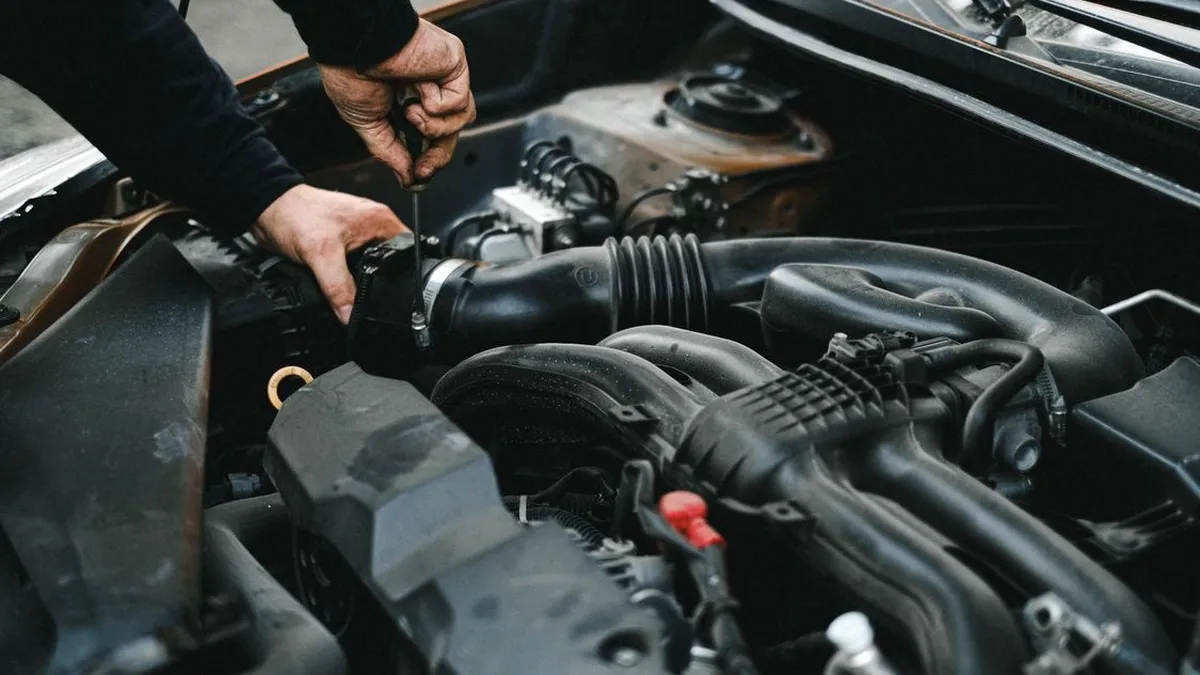
Think of it as using your car to fix your car. Your paid-off vehicle backs the loan, the loan pays the shop, and you keep the keys and keep driving the whole time. Here’s how the process works at our offices.
- Get a written repair estimate. Know the exact amount before you borrow, so you don’t take more than you need.
- Bring three things. Your vehicle, a clear Idaho title in your name, and a photo ID. If your car is already stuck at the shop, call us first at 208-505-8966 and we’ll talk through your options.
- We look at your vehicle. Loans run from $750 up to $25,000, based on your vehicle’s value. We lend on any year, mileage, or condition of a paid-off vehicle.
- Pick a payment plan. Most of our customers choose an installment loan with set monthly payments. A shorter title loan is also available. We’ll walk you through the options and the full cost in writing before you sign.
- Get your check and pay the shop. The in-store process usually takes under 30 minutes. We’ll get you your check the same day.
Your car remains your car. You keep it, you drive it, and we don’t require insurance or roadside add-ons.
Want the details first? Read how Idaho title loans work, or see why most of our borrowers choose installment loans in Idaho.
Local to the valley? Visit the pages for Boise title loans, Nampa title loans, Boise installment loans, or Nampa installment loans.
What does a title loan for car repairs cost?
Title loans cost more than most other types of credit. The Federal Trade Commission says title loans often carry monthly finance fees as high as 25%, which works out to an APR of about 300% (FTC, October 2024). That’s an industry-wide figure, not a quote for any one loan.
There’s also a real risk of losing the vehicle. In a 2016 study of single-payment title loans, the Consumer Financial Protection Bureau found that one in five borrowers had their vehicle taken for failing to repay (CFPB, May 2016). That study looked at loans due in one lump sum. It’s one reason most of our customers choose an installment loan, which spreads the cost into predictable monthly payments.
Idaho law asks you to shop around. Every Idaho title loan must carry a notice that begins, “This loan may be a higher interest loan” (Idaho Code § 28-46-504). We agree with it. Check lower-cost options first.
Here’s how to keep the cost down:
- Borrow only the repair amount. Use your written estimate as your ceiling.
- Pay it off early. You only pay for the time the loan is out, and not a penny more. Idaho’s Credit Code lets you prepay a regulated consumer loan in full at any time without a penalty (Idaho Code § 28-42-306).
- Ask for the numbers first. Before you sign, we give you your finance charge, total of payments, payment schedule, and APR in writing. Compare that total against your other options.
- Know when the money arrives. If the shop needs payment today, our same-day loans in Idaho page explains how fast funding works.
For a deeper look at pricing, read what to know about title loan interest rates. For payoff strategies, see our guide to repaying an installment loan.
Should you repair your car or replace it?
For most drivers, repairing a vehicle is far cheaper than replacing it. In August 2026, the average new vehicle sold for $50,089 (Kelley Blue Book). The average used vehicle was listed at $27,239 (Cox Automotive).
Monthly payments tell the same story. The average new-car payment reached $787 in the third quarter of 2026 (Edmunds). The average used-car payment was $542 in the second quarter of 2026 (Experian). Compare that to a one-time $2,000 to $4,500 transmission rebuild.
| Path | Typical cost | Source |
|---|---|---|
| Transmission rebuild | $2,000 to $4,500, one time | AAA, 2025 |
| Average used car | $27,239 listing price | Cox Automotive, Aug 2026 |
| Average new car | $50,089 transaction price | Kelley Blue Book, Aug 2026 |
Repairing isn’t always the right decision, though, so ask yourself these questions before you borrow:
- Is the repair cost close to what the car is worth?
- Has the car needed several big repairs in the past year?
- Did a second shop confirm the diagnosis and price?
- Is a rebuilt or remanufactured part an option?
If the repair makes financial sense, a loan sized to the estimate keeps your current vehicle on the road without adding a new monthly car payment.
What rights do Idaho borrowers have?
Idaho’s Title Loan Act gives borrowers real protections (Idaho Code §§ 28-46-501 to 509), and you should know them before you sign with any lender:
- Licensing. A lender must hold a license from the Idaho Department of Finance to make title loans (§ 28-46-503).
- A next-day way out. You can cancel at no cost by returning the money by the next business day (§ 28-46-504).
- A warning before repossession. If you fall behind, the lender must mail you a Notice to Cure Default. You then have 10 days to catch up (§ 28-46-507).
- No charges after repossession. Finance charges stop once a lender takes possession of the vehicle (§ 28-46-507).
- A cap tied to your car. The loan can’t be more than your vehicle’s retail value (§ 28-46-508).
- Paying down renewals. From the third renewal on, each renewal requires paying at least 10% of the original principal plus finance charges (§ 28-46-506).
- A place to complain. You can file a written complaint with the Idaho Department of Finance, and it will investigate (§ 28-46-504).
Life happens. If you’re having trouble making a payment, call us, and we’ll do everything we can to work with you.
Need cash for a car repair?
Freedom Title Loans has offices in Boise and Nampa. Call first, walk in, or start online. New customers get 50% off the first month’s interest.
Call 208-505-8966 Walk in: Fairview or Caldwell Boulevard office Apply online
Car repair loan FAQs
Can I get a car repair loan with bad credit?
Yes. Bad credit narrows your options, but title loans don’t depend on your score. At Freedom Title Loans, we don’t check credit. We lend based on your vehicle, a clear Idaho title in your name, and a photo ID.
Is there car repair financing with no credit check?
Yes. Some shops offer in-house payment plans, so ask whether they check credit. Title loans don’t depend on your credit. Instead, the loan is based on your paid-off vehicle.
Should I borrow the full amount I qualify for?
No. Borrow only what your written repair estimate shows. A smaller loan costs less in finance charges, and paying it off early lowers the cost even more.
How fast can I get an emergency car repair loan?
At our offices, the in-store process usually takes under 30 minutes once we’ve seen your vehicle and paperwork. We’ll get you your check the same day, so you can pay the repair shop and get back on the road.
How much can I borrow for a car repair?
Our loans run from $750 up to $25,000, depending on your vehicle’s value, and Idaho law caps any title loan at the vehicle’s retail value. We recommend borrowing only the amount on your written repair estimate.
Can I pay off my loan early?
Yes. You only pay for the time the loan is out, and Idaho’s Credit Code lets you prepay a regulated consumer loan in full at any time without a penalty.
The bottom line on car repair loans
An expensive repair bill doesn’t have to cost you your ride to work. Get a written estimate, compare your lowest-cost options first, and borrow only what the repair actually costs. If your credit stands in the way, your paid-off car can help pay for its own repair, and you keep driving it. Have questions first? Our title loan FAQs cover the basics.
This article is general educational information, not financial advice. Repair costs are national averages from the sources cited and do not include local taxes or fees. Loan terms vary. All applicants are subject to approval based on vehicle value and ability to repay. Freedom Title Loans is licensed by the Idaho Department of Finance, and Idaho title loans are governed by Idaho Code §§ 28-46-501 through 28-46-509. The finance charge, total of payments, payment schedule, and APR will be disclosed in writing before you sign. See our Consumer Disclosures for complete terms. Please read all loan agreements carefully before signing.
